

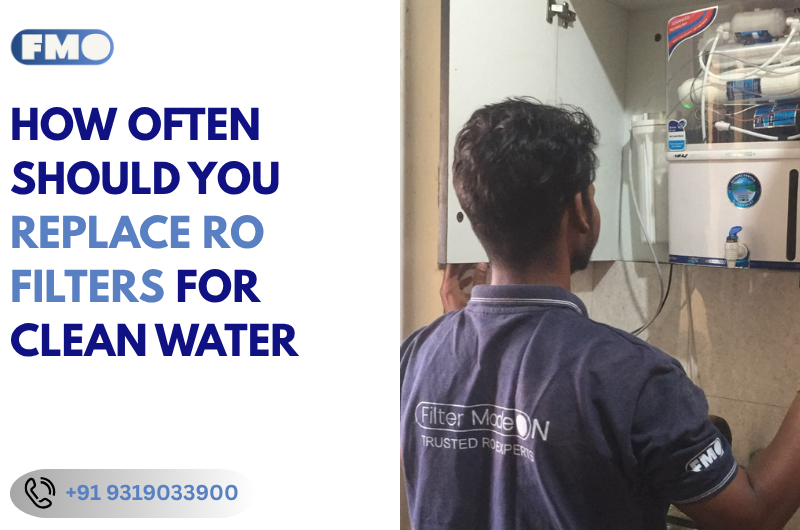
Clean and safe drinking water is essential for a healthy lifestyle, especially in urban areas like Noida where water quality can vary significantly. A Reverse Osmosis (RO) water purifier plays a critical role in removing impurities, heavy metals, and harmful contaminants. However, the efficiency of any RO system depends heavily on timely maintenance and component replacement. One of the most important aspects of maintenance is understanding the right RO filters replacement time.
If you delay replacing filters, your purifier may fail to deliver clean water, leading to health risks and reduced system performance. In this guide, we will explain how often you should replace RO filters, the signs to watch for, and how proper maintenance ensures long-term efficiency.
Why RO Filter Replacement Is Important
RO systems consist of multiple filtration stages, each designed to remove specific impurities. Over time, these filters accumulate dirt, sediments, and contaminants, reducing their effectiveness. If filters are not replaced on time, the purifier may start producing water that is not safe for consumption.
Ignoring the correct RO filter replacement time can also put extra pressure on the RO membrane and other internal components. This can lead to costly repairs or even complete system failure. Regular replacement ensures that your water purifier continues to deliver high-quality water consistently.
Understanding Different RO Filters and Their Lifespan
An RO system typically includes several types of filters such as sediment filters, carbon filters, and the RO membrane. Each of these components has a different lifespan depending on usage and water quality.
Sediment filters are usually the first stage of filtration and are responsible for removing dust, sand, and larger particles. These filters generally need replacement every 6 to 12 months. Carbon filters help in removing chlorine, bad odor, and organic contaminants. Their lifespan is also around 6 to 12 months.
The RO membrane is the core component that removes dissolved impurities and heavy metals. It typically lasts between 18 to 24 months but may require earlier replacement if the water quality is poor. Understanding the correct RO filter replacement time for each component is essential for maintaining system efficiency.
Key Signs That Indicate RO Filter Replacement Time
Recognizing the warning signs of filter wear can help you take timely action. One of the most common signs is a noticeable change in water taste or smell. If your RO water tastes bad, it is often an indication that the filters are no longer effective.
Another sign is reduced water flow. When filters become clogged, they restrict the flow of water, making the purification process slower. You may also notice that your water purifier not giving clean water, which can be due to worn-out filters or membrane issues.
Unusual noise from the purifier or frequent auto shut-offs can also indicate that the system is under stress due to clogged filters. These signs should not be ignored, as they can lead to more serious problems.
How Water Quality Affects RO Filter Replacement Time
The frequency of filter replacement depends largely on the quality of the input water. In areas with high TDS levels, filters tend to wear out faster. This makes it important to address high TDS water solution strategies along with regular maintenance.
If your water supply contains a high amount of dissolved solids, sediments, or chemicals, your filters will require more frequent replacement. Regular servicing and water testing can help determine the exact RO filter replacement time based on your local conditions.
RO Service Frequency and Its Role in Maintenance
In addition to filter replacement, regular servicing plays a vital role in maintaining the performance of your RO system. Understanding the correct RO service frequency ensures that your purifier is inspected and cleaned at regular intervals.
Ideally, an RO system should be serviced every 3 to 6 months. During servicing, technicians check all components, clean internal parts, and identify potential issues before they become major problems. Regular servicing helps in extending the life of filters and ensures consistent water quality.
Common Mistakes to Avoid in RO Maintenance
Many users make the mistake of delaying filter replacement until the system stops working completely. This approach not only affects water quality but also increases repair costs. Ignoring the recommended RO filter replacement time can lead to long-term damage.
Another common mistake is attempting to use low-quality or incompatible filters. Using genuine and high-quality components is essential for maintaining the efficiency of your purifier. It is also important to avoid irregular servicing, as this can lead to unnoticed issues that worsen over time.
Professional RO Maintenance vs DIY Approach
While some basic cleaning tasks can be performed at home, most maintenance activities require professional expertise. A trained technician can accurately determine the RO filter replacement time and ensure that all components are functioning properly.
Professional services also include proper cleaning of internal parts, checking water pressure, and ensuring that the system is operating efficiently. This level of care cannot be achieved through a DIY approach alone.
Benefits of Timely RO Filter Replacement
Replacing filters at the right time offers several advantages. It ensures that your purifier delivers clean and safe drinking water consistently. It also improves the taste and quality of water, making it more suitable for daily consumption.
Timely replacement reduces the load on other components, extending the overall lifespan of the system. It also helps in maintaining energy efficiency, as a well-functioning purifier consumes less power.
Choosing the Right RO Service Provider
Selecting a reliable service provider is crucial for maintaining your RO system. A professional company offers experienced technicians, transparent pricing, and timely service. They ensure that the correct RO filter replacement time is followed and that high-quality components are used.
Filter Mode ON provides expert solutions for RO servicing, including filter replacement, maintenance, and repair services. With a focus on customer satisfaction and quality service, they ensure that your purifier performs efficiently at all times.
Conclusion
Understanding the correct RO filter replacement time is essential for maintaining the performance and efficiency of your water purifier. Regular replacement of filters, combined with proper RO service frequency, ensures that your system delivers clean and safe drinking water consistently.
Ignoring maintenance can lead to poor water quality, higher repair costs, and reduced system lifespan. By following a structured maintenance schedule and opting for professional servicing, you can ensure that your RO system continues to function effectively.
Investing in timely filter replacement and regular servicing is not just about maintaining an appliance; it is about protecting your health and ensuring access to clean drinking water every day.
